
Medicine has spent the last century treating symptoms instead of systems. The pharmaceutical industry invests $2.6 billion and 15 years to bring a single drug to market — and 86% of them fail. Millions of patients wait for treatments that may never arrive. VARL exists to end that cycle.
The Problem
Modern medicine operates on a model designed in the 20th century. Diseases are categorized by symptoms rather than molecular mechanisms. Drug development follows a linear pipeline — hypothesis, synthesis, animal testing, clinical trials — where each step takes years and most compounds fail at the last stage. The entire system is built on trial and error at the molecular level.
For every successful drug, thousands are abandoned. For every patient who receives a working treatment, millions receive therapies that were never optimized for their specific biology. The gap between what science knows and what medicine delivers is measured in human lives.
Chronic diseases now account for 74% of all deaths worldwide. Cancer, cardiovascular disease, diabetes, neurodegeneration — these are not unsolvable mysteries. They are complex systems problems that require computational approaches operating at a scale and speed that human cognition alone cannot achieve.
The question is not whether biology can be decoded. It can. The question is whether we will continue to accept a system where 86% of drug candidates fail, where diagnosis comes too late, and where treatment is designed for the average patient rather than the actual one. VARL's answer is no.
Why We Do This
Somewhere right now, a mother is sitting in a hospital corridor waiting for a word that will change everything. A father is Googling symptoms at 3 a.m., hoping to find something, anything, that sounds like good news. A child is asking why the medicine makes them feel worse before it makes them feel better. And a doctor is standing in front of a scan, knowing that what they are seeing arrived too late to reverse.
These are not numbers on a report. These are real people, in real rooms, waiting for real answers. Health is not something you measure in a chart. It is the moment a mother finally exhales. It is the year a child gets to grow up. It is the treatment that actually works because someone took the time to understand one person, not a crowd.
We started this company because we believe that losing someone to a disease we could have predicted is not a tragedy of nature. It is a failure of tools. The biology is there. The signals are there. What has been missing is a system capable of reading them fast enough, deeply enough, personally enough. That is what we are building.
Every technology we develop, every model we design, every simulation we architect comes back to a single question: will this give someone more time? Time measured in birthdays, in first steps, in one more conversation with the person they love. If the answer is yes, we build it. If it is not, we go back and make it better.
The world does not need another pharmaceutical company that treats disease as a market. It needs one that treats every human body as the irreplaceable thing it is. That is why we exist.
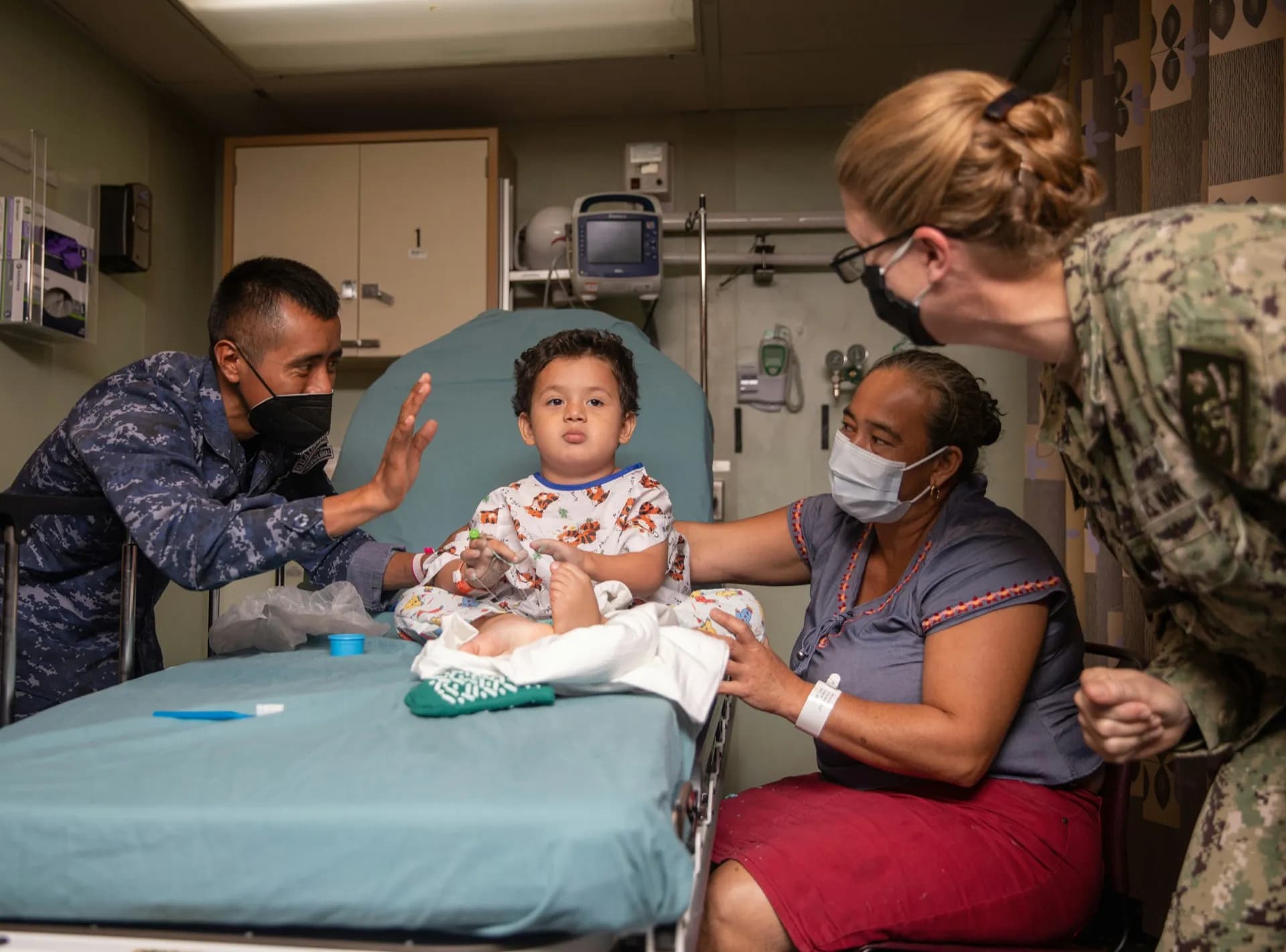
Mateo is three years old. He was born with a congenital heart defect. His parents were told he would need open-heart surgery, but the waiting list was long and the risks were real. What if there was a way to simulate his heart completely, understand exactly where and why the tissue wasn’t developing correctly, and find a path that guides his body to correct the defect on its own? No operating room. No scars. That is the kind of medicine we are building toward. Not because it sounds futuristic, but because children like Mateo deserve better than a waiting list.
of drug candidates fail clinical trials
average cost to develop a single drug
from discovery to patient
of global deaths from chronic disease
target success rate through simulation-first validation
projected development cost with digital twin screening
targeted discovery-to-validation cycle
designed for individual biology, not population averages
Global Disease Burden
Disease does not respect borders. From chronic conditions overwhelming developed healthcare systems to infectious diseases devastating underserved populations, the crisis is planetary. Every region faces unique challenges — and every challenge demands a precision response.
Our Approach to Health
We are not iterating on the existing system. We are designing its replacement. VARL's platform is being built to treat health not as the absence of disease, but as a continuously optimized state — monitored at the molecular level, predicted before disruption, and corrected with precision that the current pharmaceutical paradigm cannot achieve.
Disease begins at the molecular level years before symptoms appear. We are developing AI models that analyze genomic, proteomic, and metabolomic data to identify disease trajectories in their earliest stages — when intervention is most effective and least invasive. Our goal is to detect what traditional diagnostics miss: the silent molecular shifts that precede cancer, neurodegeneration, autoimmunity, and metabolic collapse.
Every patient is unique at the molecular level. We are building a platform that constructs digital twins — computational replicas of individual biological systems — capable of simulating how each patient will respond to every possible treatment. Instead of prescribing based on population averages and hoping for the best, clinicians will be able to test thousands of therapeutic scenarios computationally before administering a single dose. This is not personalized medicine as a marketing term. It is medicine redesigned from first principles.
The traditional drug pipeline wastes 86% of its candidates because it cannot predict failure until it is too late. We are engineering a simulation engine designed to screen millions of molecular candidates against digital twin models simultaneously — identifying toxicity risks, efficacy limits, and off-target effects before any compound enters a laboratory. Our target is to compress the discovery-to-validation cycle from 15 years to under 3, and to fundamentally change the economics of drug development.
Most treatments manage disease. We are working to design interventions that reverse it. By identifying the molecular switches that control tissue regeneration, stem cell activation, and cellular reprogramming, our platform will generate therapies that restore biological function rather than merely slowing its decline. From neuronal repair in Alzheimer's disease to cardiac tissue regeneration after myocardial infarction — we are mapping the pathways back to health.
Health is not a binary state. It is a dynamic system that requires continuous monitoring and adaptive response. We are developing a biosensor-integrated platform designed to track hundreds of molecular biomarkers in real time, detecting deviations from healthy baselines before they cascade into clinical disease. Digital twins will update continuously as new data arrives, enabling a model of healthcare where treatment is proactive, not reactive — and where the concept of being “too late” ceases to exist.
Focus Areas
VARL is concentrating its health platform on disease categories where computational biology can deliver the greatest impact — where the gap between what is known and what is treated is widest, and where traditional approaches have systematically failed.
Oncology
10 million deaths per year. Our platform is being designed to model tumor microenvironments at single-cell resolution, identify novel drug targets within signaling cascades, and predict immunotherapy response on a per-patient basis. Every cancer is unique. Every treatment should be too.
Neurodegeneration
55 million people living with dementia. We are developing digital twin architectures that simulate neuronal network degradation, protein misfolding cascades, and blood-brain barrier dynamics to identify intervention points that arrest and reverse cognitive decline — modeling what MRIs cannot see.
Autoimmune Disease
300+ million affected globally. The immune system attacking itself is a systems failure, not a single-gene problem. Our approach maps the complete immune regulatory network to find the precise points where tolerance breaks down — enabling therapies designed to recalibrate rather than suppress.
Cardiovascular
The leading cause of death worldwide. We are building simulation frameworks that model cardiac tissue mechanics, arterial plaque formation, and hemodynamic stress at molecular resolution — designed to predict heart failure years before clinical onset and inform interventions that target vascular damage at its source.
Rare Diseases
7,000+ rare diseases, 95% have no approved treatment. Traditional pharma ignores them because the economics don't work. A computational approach can make rare disease research economically viable by eliminating the cost barriers of physical experimentation. Every patient deserves a treatment, regardless of the size of the population.
Infectious Disease
Pandemics will happen again. Our platform is being architected to anticipate pathogen mutation trajectories, pre-compute vaccine candidates for variants that don't yet exist, and model population-level transmission dynamics. When the next outbreak arrives, the goal is to respond in days, not months.
We are not building a better pharmaceutical company.
We are building a world where no one hears
“there is nothing more we can do.”
SOURCES
- 74% chronic disease deaths — WHO, Noncommunicable Diseases Fact Sheet, 2023.
- 86% clinical trial failure rate — Sun et al., “Why 90% of clinical drug development fails,” Acta Pharmaceutica Sinica B, 2022.
- $2.6B average drug development cost — DiMasi et al., Journal of Health Economics, 2016 (inflation-adjusted).
- 15-year average development timeline — Wouters et al., JAMA, 2020.
- 10 million cancer deaths per year — WHO, Global Cancer Observatory (GLOBOCAN), 2022.
- 55 million people with dementia — WHO, Dementia Fact Sheet, 2023.
- 300+ million affected by autoimmune diseases — American Autoimmune Related Diseases Association (AARDA), 2023.
- 7,000+ rare diseases, 95% without treatment — Global Genes / NORD, 2023.